
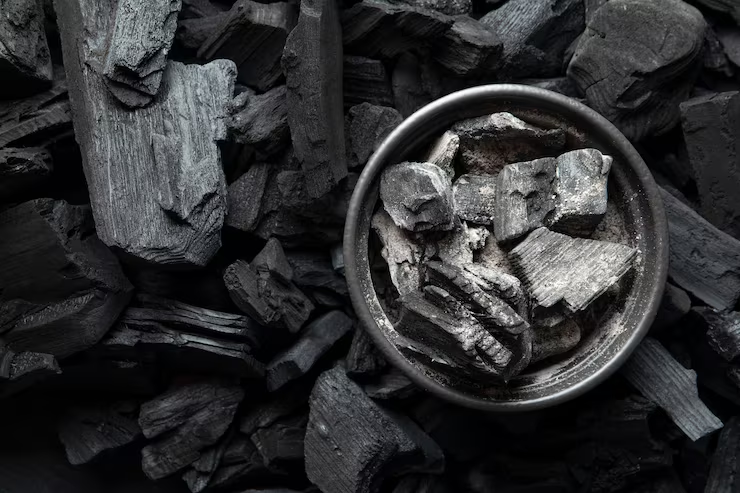
As the demand for clean, efficient, and sustainable energy grows, households and restaurants are increasingly seeking alternatives to traditional fuel sources. One solution that has gained popularity is smokeless charcoal briquettes for homes and restaurants. These high-density, eco-friendly fuel blocks offer a range of benefits, from consistent heat output to reduced emissions, making them an ideal choice for domestic and commercial cooking needs.
Understanding Smokeless Charcoal Briquettes
Smokeless charcoal briquettes are solid fuel blocks made by compressing biomass materials such as coconut shells, wood dust, or agricultural waste. The compression creates a dense, uniform block that burns longer and cleaner than traditional charcoal. Unlike ordinary charcoal, which can produce excessive smoke and uneven heat, smokeless briquettes offer a stable and controllable flame.
The term “smokeless” refers to minimal smoke released during combustion, improving indoor air quality and reducing carbon monoxide and other harmful emissions. This feature makes them particularly suitable for indoor kitchens and restaurants with limited ventilation.
Benefits for Homes
For home use, smokeless charcoal briquettes provide several advantages. First, their long-burning nature means fewer briquettes are needed to maintain consistent heat, translating into lower fuel costs and reduced effort in replacing or adding fuel. Families can enjoy cooking meals with steady heat without frequent interruptions caused by traditional firewood or lump charcoal.
Second, minimal smoke enhances the cooking environment. Kitchens remain cleaner, and the risk of smoke-related health issues is significantly reduced. This is particularly important for households with children or sensitive individuals.
Finally, the uniform shape and size make them easy to handle and store. Their durability ensures they can be kept for extended periods without degradation, maintaining readiness for whenever cooking or heating is needed.
Advantages for Restaurants
Restaurants, especially those offering grilled or barbeque dishes, can benefit greatly from smokeless charcoal briquettes. Consistent heat output ensures dishes are cooked evenly and efficiently. Smokeless briquettes help chefs maintain precise temperature control, improving food quality and taste.
Reduced smoke in the cooking area contributes to a safer and more comfortable environment for kitchen staff. It also minimizes the need for extensive ventilation systems, which can be costly. By using smokeless briquettes, restaurants enhance operational efficiency while supporting a cleaner kitchen.
Environmental Benefits
Using smokeless charcoal briquettes for homes and restaurants is also a step toward sustainable energy practices. These briquettes are often produced from renewable or recycled biomass materials, reducing reliance on timber and managing agricultural waste effectively.
Furthermore, cleaner combustion contributes to lower air pollution, indoors and outdoors. By reducing the release of harmful particulates and greenhouse gases, smokeless briquettes support national and global efforts for cleaner energy and reduced environmental impact.
Cost Efficiency
Another advantage is cost-effectiveness. While the initial price may be slightly higher than traditional charcoal, their longer burn time and higher energy output make them more economical. Households and restaurants can reduce fuel consumption, lower operational costs, and enjoy consistent, high-quality heat for cooking or heating.
Conclusion
Smokeless charcoal briquettes for homes and restaurants provide a versatile, reliable, and eco-friendly fuel solution. Their long-lasting performance, minimal smoke production, and environmental benefits make them an excellent choice for modern households and commercial kitchens. By switching to smokeless briquettes or clean burning briquette charcoal, users enjoy cleaner cooking, lower costs, and a safer, healthier environment.
Investing in smokeless charcoal briquettes and clean burning briquette charcoal is not just practical—it is a conscious step toward sustainable living and responsible energy use. Whether for family meals at home or professional cooking in restaurants, these fuels offer an efficient and modern approach to clean energy.